


Ramadan Food Drive — Mandera West (22–24 Feb 2025)
From 22nd to 24th February 2025, the Ali Roba Foundation (ARF) mounted its most ambitious Ramadan food drive to date,an operation that not only matched last year’s success but decisively surpassed it. Building on lessons from the 2024 exercise in Elwak, this year’s distribution expanded its reach to 2,200 households,more than three times the previous year’s coverage. The focus areas were communities identified as most in need,Takaba , Dandu, Qofole, Takaba South, Gither, and Lag Sure,where the effects of prolonged hardship have strained household resilience and heightened food insecurity.
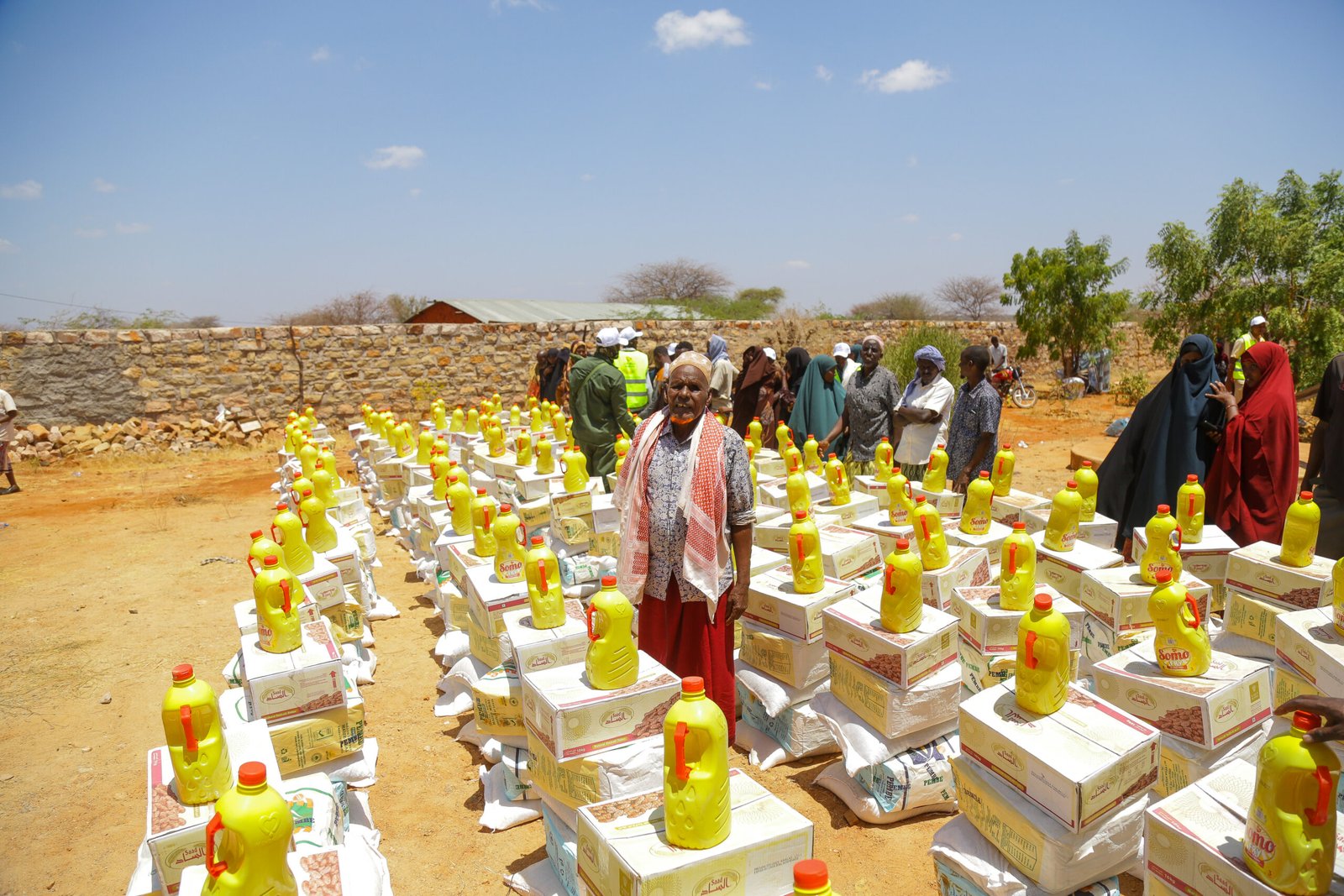
Over three tightly coordinated days, the Foundation transformed beneficiary mapping, logistics, and last-mile delivery into a calm, precise rhythm of service. Each registered household received a 63 kg Ramadan pack comprising rice, beans, cooking oil, flour, maize meal, and dates,staples selected for nutrition, cultural relevance, and the ability to sustain families through suhoor and iftar. The incremental increase from 56 kg in 2024 to 63 kg this year reflected ARF’s commitment to continuous improvement and deeper impact.
Preparation began weeks in advance. Teams conducted community consultations with local administrators, elders, and faith leaders to validate beneficiary lists and identify households facing cumulative vulnerabilities,elderly caregivers, female-headed homes, persons with disabilities, and families with many dependants. Procurement followed a strict quality checklist; packaging lines were organized for uniformity and traceability; and transport plans choreographed movement from central warehouses to field collection points with real-time coordination. A special note of appreciation goes to the Human Development Fund, whose modest but timely support helped ARF scale procurement and logistics across the six locations. Their contribution,combined with donations from well-wishers,ensured stocks were sufficient and delivery remained on schedule.
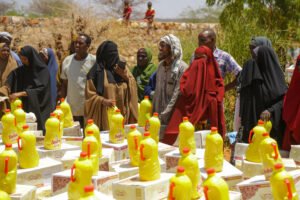
At each site, the experience was designed around dignity. Shaded waiting areas, clear markers, and well-briefed volunteers ensured a respectful flow, prioritizing the elderly and persons with limited mobility. Verification desks cross-checked lists, while separate support teams helped carry loads to waiting boda bodas and community vehicles. The atmosphere,punctuated by greetings, prayers, and quiet gratitude,spoke to a shared understanding: Ramadan is compassion in action.
What made 2025 “better than the rest” was not only the larger numbers but the higher standards. ARF deployed a simple monitoring tool to record distributions by location and household category, enabling quick course corrections when lines grew or supplies thinned. A dedicated communications desk captured photo evidence and beneficiary acknowledgements for accountability. And because transparency is central to trust, summaries of daily tallies were shared with community representatives before the teams moved to the next site.
The impact was immediate and visible. Families left collection points with the assurance that their kitchens would be stocked for the month’s early days, and that staples could be stretched to cover extended relatives and neighbors in need. Elders remarked on the orderliness; mothers appreciated the inclusion of dates and oil,items that elevate iftar beyond subsistence; young volunteers spoke of learning “how compassion is planned, not improvised.”
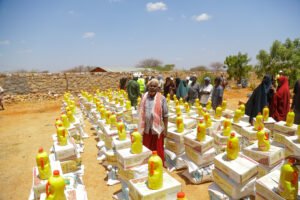
For ARF, the drive reaffirmed a core belief: scale must come with structure. The Foundation’s model,community engagement, disciplined logistics, transparent documentation, and volunteer power,once again converted goodwill into tangible relief. It also set a new baseline for what future Ramadan distributions can achieve.
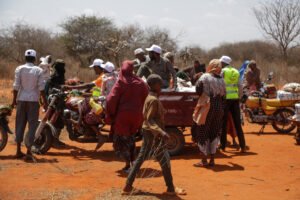
To every donor, partner, and volunteer who walked with us from Takaba to Lagsure,asante sana. And to the Human Development Fund, thank you for standing with ARF to make this expanded reach possible. Your generosity did more than fill food baskets; it lightened the mental burdens of parents, restored dignity to households under pressure, and reminded entire neighborhoods that they are seen and supported.